Looking for a solution to the Cuban dilemma
While the American invasion of Iran sinks ever lower into the muck, President Trump escalates in his threats and imprecations, the latest being to essentially destroy the entire country unless Iran accedes to his demand that it open up the Strait of Hormuz by eight o’clock tonight, Washington time.
There may be a silver lining to this insanity: At least Trump’s childlike attention is diverted, for the moment at least, from trying to starve Cuba by imposing an energy blockade and other measures that indeed have pushed the island’s economy to near collapse. After the a quickie defenestration of the government of Venezuela by the kidnapping of its president and his wife, Trump expressed confidence he could do “whatever he wants” with Cuba.
Not so fast. The unraveling debacle in Iran has tempered Trump’s triumphalism. In fact he allowed an exception to his own energy blockade of Cuba and let a Russian tanker reach the island on March 31 and deliver 730,000 barrels of crude oil that will tide the Cuban economy over if only for a few months.
Out of this chaos, however, could emerge a way forward from Cuba’s nightmare of economic paralysis and political oppression. The U.S. will need to finally recognize that the economic embargo of Cuba has not accomplished its stated goal of bringing about political change there. It has wrought only misery for the Cuban people. An estimated one million have left the island between 2021 and 2023.
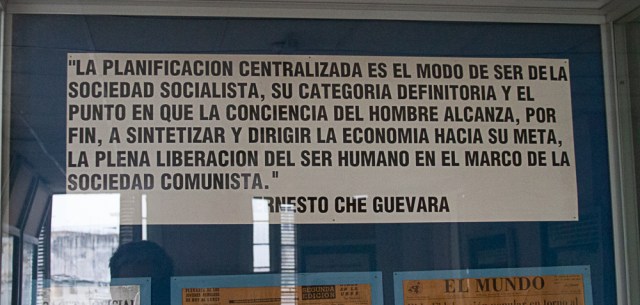
The communist Cuban dictators also would need to face the reality that sixty years of beating the communist drum and quoting Che and Fidel have led to a dead end. Yes, Cuba has a high level of education, public health and other social indices that some argue are the envy of many Third World countries. But the Gordian knot Cuban officials haven’t been able to cut is how to develop an economy that can pay for all those enviable goodies. Rather, communist Cuba has had to depend on the kindness of other nations to survive: the former Soviet bloc for billions in subsidies, until recently Venezuela for oil, and Cuban exiles in the U.S. for millions in remittances yearly.
Vietnam may be a model for Cuba to follow. For 19 years following the end of the Vietnam War, the U.S. maintained a strict economic embargo on Vietnam, presumably because of unresolved issues surrounding American POWs and MIAs. The embargo was officially lifted in 1994 by the U.S. The following year the two countries reestablished full diplomatic relations.
Following the fall of the Iron Curtain, Vietnam, which had maintained close trade relations with the Soviet bloc made a dramatic about-face in its economic policies in 1986 with the adoption of “Doi Moi” which translates roughly as “innovate” or “renovate” and has been compared to Gorbachev’s reforms in the Soviet Union. The goal of Doi Moi was to create a “socialist-oriented market economy” that effectively embraces a free-market economy but also, much like China, leaves the communist political structure intact.
That’s admittedly a tricky balance that in Russia has led to corruption on a grand scale, a system that has been nicknamed a kleptocracy with one Vladimir Putin, a dictator in power for 26 years. But in Vietnam it has fueled economic growth that Cuba could only dream about: Between 1990 and 2000 Vietnam’s Gross Domestic Product almost quintupled from $6.5 billion to $31.1 billion.
To effect a similar miracle will require dramatic changes in Havana and Washington, but both sides may not have that many options. After the disastrous adventure in Iran, Trump might rethink his lunatic notion that Cuba is his for the taking or that the tough-as-nails Cuban Army will throw down its weapons and sing “God Bless America” at the sight of U.S. Marines. Similarly, the leadership in Havana might have to swallow the once unthinkable reality that it’s time to revisit the communist dreams they worked so hard to sustain for six decades.
 El Rancho Santa Clara
You’ve got it, Bubba. If only they were listening to you instead of each other…Trump’s surrounded by his “yes men” while the Cuban prez is surely the same…so no one’s speaking truth to power in either country. Which, of course, is the stalemate we’ve had for some 60 years.
LikeLike
Thanks for explaining all of this to me.From what I have read it is Rubio who is pushing for the takeover of Cuba! I hope somehow the people of Cuba will be saved and Cuba will prosper similar to Vietnam. Lordee what a mess the World is in at present! (<That is a polite statement for what I really think)
Yahoo Mail: Search, Organize, Conquer
LikeLike