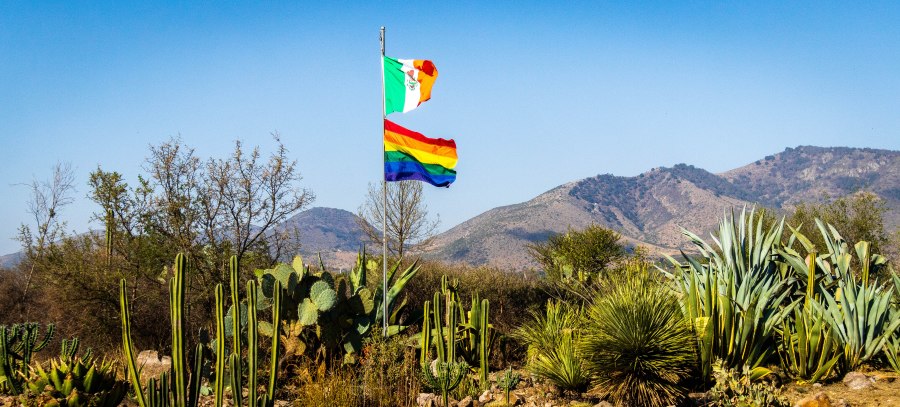
Homophophic campaigns spread in the U.S. but in Mexico acceptance reigns
Homophobia in the Republican Party is like a malignant and recurring virus. According to the Human Rights Campaign, a gay civil rights advocacy group, so far this year 520 pieces of legislation targeting the LGBTQ community have been introduced in Republican-controlled state legislatures. Many of the proposed laws probably won’t get anywhere but their sheer number is symptomatic of the anti-gay fever gripping Republicans, with Governors Ron DeSantis (Florida) and Gregg Abbott (Texas), auditioning for the role of Chief Inquisitor.
At first sight the latest homophobic piling-on may appear focused on transgenderism and drag shows, presumably to keep children from catching the gay contagion through “grooming,” in effect, a reprise of Anita Bryant’s homophobic campaign during the mid-70s. But the scope of the campaign goes far beyond to, for instance, include bans of gay-positive books and discussions of sexual orientation in primary schools. But the ultimate goal clearly is to re-marginalize and demonize LGBTQ people.
Last Sunday, Stew and I went to Guadalajara—second-largest and most beautiful urban area in Mexico—to watch the annual Gay Pride Parade, which has meandered down one of the city’s many majestic boulevards since 1984, after persistent protests against repression of LGBTQ people by state and municipal authorities. Though it’s one the largest pride parades in Latin America, after Buenos Aires and Rio de Janeiro, it’s a raucous but modest affair compared to Mexico City’s colossal Pride Parade, the next one slated for June 24 which we also plan to attend.
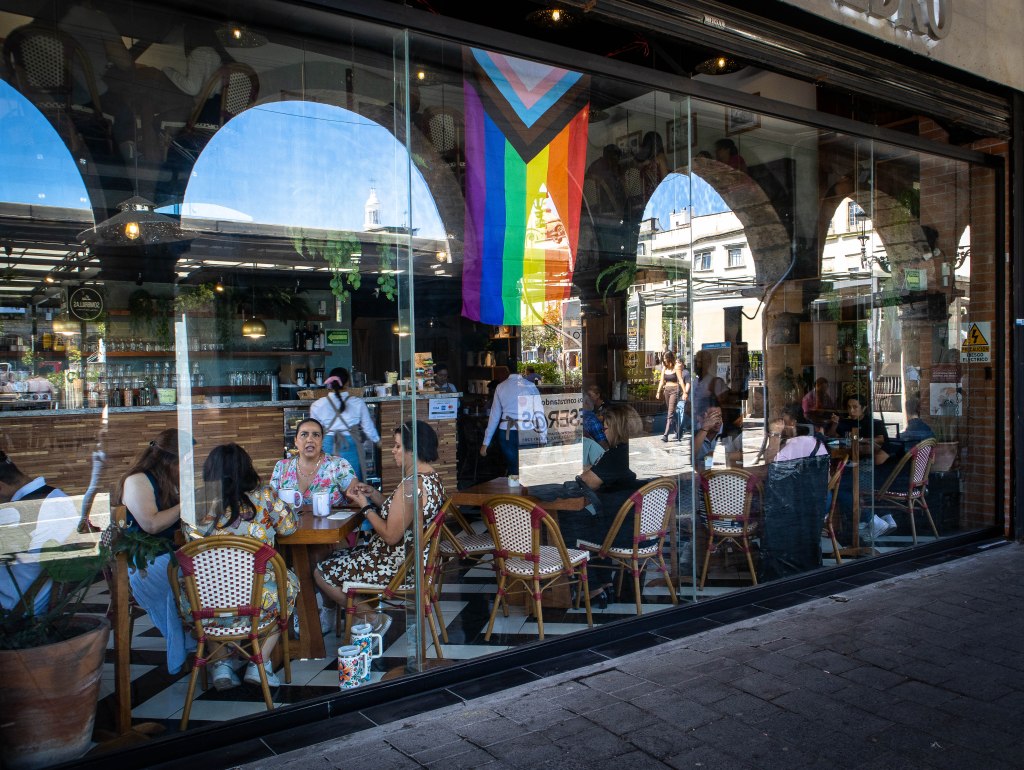
Over dinner on our last night in Guadalajara, Stew and I talked about the openness and self-assuredness of gay people in Mexico, particularly compared to the nonstop homophobic harassment by conservatives in the U.S. In our 17 years in Mexico we’ve never sensed a even a whiff of anti-gay discrimination.
Since 2000, gay rights in Mexico have progressed by fits and starts—the country has 31 states plus Mexico City, and disputes often erupt at the state level—but the momentum has been unmistakably forward. A 2018 University of Vermont study article in fact argued that for a number of reasons Mexico has stronger protections for LGBT people than the U.S.

Though I’m gay, I’ve only met one transgender woman, here in San Miguel, whose beautiful singing voice was as beautiful as her looks. I don’t pretend to comprehend what would drive a person to change her birth gender, but I can imagine, respect—and even admire—the courage it takes to pursue such life-altering decision and its consequences.
More incomprehensible is what is the state’s interest in targeting and tormenting transgender people other than to create another group to be persecuted for political purposes. In the case of minors, the response should be supportive counseling to help them and their parents make the right decision, rather than prosecute parents and even threaten to withdraw custody in cases of minors going through or considering gender reassignment with parental consent.
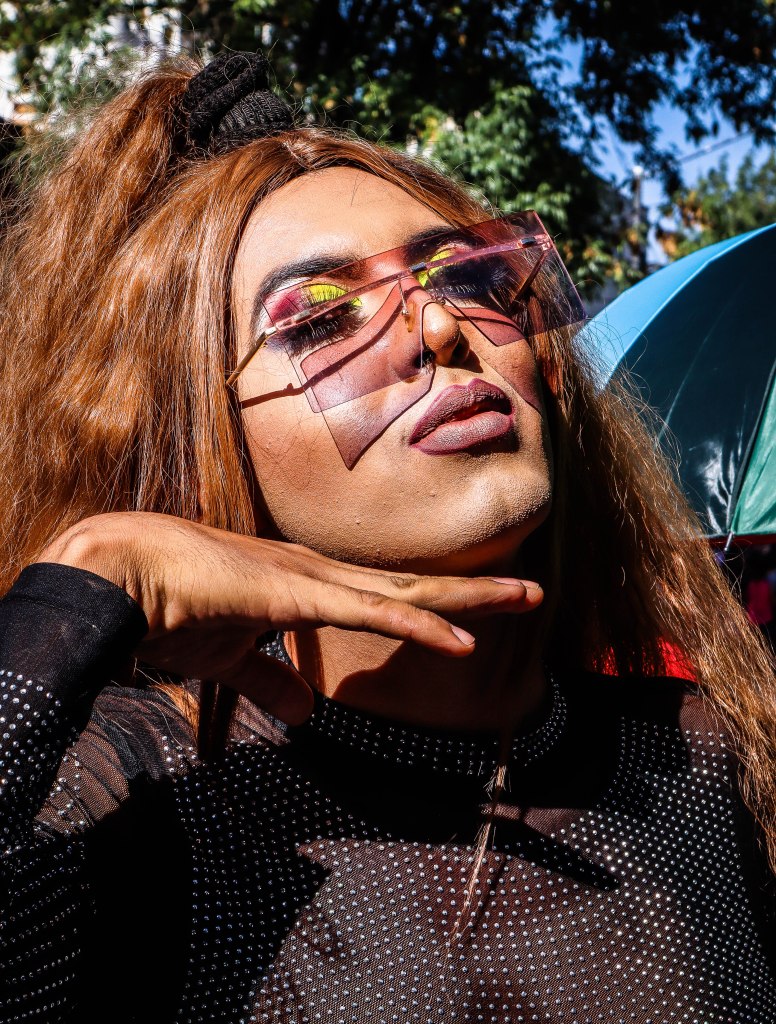
RuPaul, the ever-reigning empress of drag, with her own long-running TV show, “RuPaul’s Drag Race” best summarized the phenomenon of drag. “We are all born naked, and the rest of it is drag,” he said.
Men dressed up as women, and less often vice versa, for entertainment, religious ceremonies, play-acting—or just for fun—goes back to the ancient Greeks. It continues today in New Orleans’ Mardi Gras and San Miguel’s own Locos Parade, to name just two venues.
Anyone unable to chuckle by the sight of a man decked out in a mountainous purple wig, inch-long eyelashes and a DDD-size bustier—and going by the name of Vanessa Velour, Bianca del Rio or just plain Alaska—has lost his sense of humor and should go looking for it, maybe under the bed or behind the refrigerator.
Gov. Ron DeSantis should have met Patrick, my barber in Chicago who had a very successful sideline as a drag performer. His Liza Minelli was his pièce de résistance and was so credible that one Halloween, Patrick-cum-Liza was seriously propositioned by a Chicago policeman on patrol on Halsted Street, the city’s gay thoroughfare.
But Ron DeSantis? Nah, not even Patrick-as-Liza show could wipe off his scowling rictus.

Mexico, on the other hand, has embraced LGBTQ rights gradually, changes first occurring in Mexico City and from there onto the rest of the country but without the rancorous political and sectarian debates or class warfare that have accompanied such changes in the U.S.
In 2003, the Mexican Congress unanimously adopted legislation protecting the rights of a number of groups include gays and lesbians, and created a mechanism for enforcing the law—a first in Latin America, after Ecuador. No such federal legislation has ever been adopted in the U.S. In 2011, the first article of the Mexican Constitution was amended to explicitly prohibit discrimination based on sexual preference.

In 2015 Mexico’s Supreme Court ruled in favor of marriage equality, though ratification by all the state governments didn’t happen until 2022. Since 2014, Mexico City residents who want to change their gender identification can request that the Civil Registry make the necessary changes in their birth certificates.
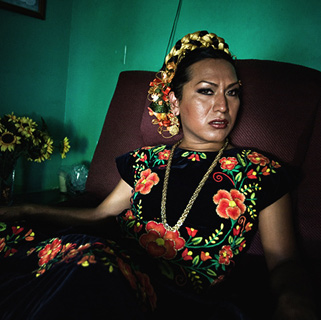
It’s curious how such sea changes—many of which occurred ahead of the U.S.—have taken place in a supposedly deeply religious country that professes its allegiance to conventional family values. One explanation is that some same-sex rituals and traditions can be found in some of Mexico’s indigenous communities, including the Zapotecs who today still revere, and even celebrate, the muxes, who are men who dress and carry on as women and are considered a “third gender.”
Another theory is that although Roman Catholicism is ubiquitous in Mexico—every bus station seems to have a shrine to the Virgin of Guadalupe—there is also a strong tradition of secularism, in effect a far more impenetrable wall of separation between church and state.
The religious affiliation of political candidates doesn’t ever come up during debates or campaigns, or the type of religious theater that brought us the spectacle of evangelical ministers holding hands to “pray over” Trump in the Oval Office, or the president posing in front of a church near the White House holding a Bible aloft.
Mexico’s president since 2018, Andrés Manuel López Obrador, or AMLO as he is usually called in Mexico, is considered a leftist by some, a populist by others and even compared to Trump by still others. He was initially identified as Protestant, but then claimed to be Catholic and ultimately a Christian: “I am a Christian in the broadest sense of the word, because Christ is love and justice is love.”
Whatever. During his long trajectory to the presidency he studiously avoided the topics of abortion and gay rights. But tellingly, during his first statements after winning the election in 2018, he explicitly supported LGBTQ rights, the first Mexican president to do so.
 El Rancho Santa Clara
We agree completely. In our 17 years living as a married couple in San Miguel, neither Fred nor I have had even a fleeting moment of “uncomfortableness”. We’re in Mexico until (as our minister in Dallas used to say) the Grand Finale….
LikeLike
Families with gay or transgender children are leaving Florida because of Gov. Ron DeSantis, since they no longer feel safe here. I worry that when these families leave it will create a Florida where these families will not even feel safe enough to return to visit grandparents, aunts, uncles, and the rest of their extended family. I don’t understand Gov. Ron DeSantis and his policirs but then I don’t understand the need for these new laws either.
LikeLike
I agree with you about Mexicans’ reaction to us being gay. We have not had any hassle whatever. But somehow we are still thinking of a Next Act somewhere else, before the Grand Finale. Stew wants to be near the water. Where, is still to be determined. Stay tuned. Thanks for your comment, bubba.
LikeLike
What these “religious Christians” are doing to these poor kids is unconscionable. Scarier still, they seem to be doing it with the support of the state lawmakers. Shame on them.
al
LikeLike
Gre
LikeLike
There were only three letters in your reply: “Gre”, Did you change your mind or fall off your chair? LOL
LikeLike
No my keyboard is fubar. Trying to tell you the story of my oncology doctor, who is a good old boy raised
LikeLike
Is there more to this story, like another installment…😃
LikeLike
Thanks for posting! A brilliantly written post as usual. When I first came to Mexico in 1974 working on a contractwith the State Department involving drug interdiction, I spenta lot of time in CDMX and other places. As I rode the subway to the airport daily it gave me time to sitand observe the people of Mexico. One of the things that was evident was the “live and let live” attitudethat was prevalent. It seriously impacted me. It was refreshing to put it mildly It seems almost impossible to say that I think my desire and decision to moveto Mexico some day began immediately. CDMX is THE place to be on June 24th. I, without knowing it, was involvedin watching the four hour parade while sitting on my suitcase since it was impossibleto get to my hotel! But, what fun it was to sit there and see all the joy and exuberancenot only of those on the floats but everyone in close proximity! A memory I will neverforget. Enjoy my friends. I’ll be thinking of you both!
Barbara San Miguel de Allende, Mexico
415 124-9450 Mx Cell 713 589-2721 Vonage
http://www.babsofsanmiguel.blogspot.com
“Life is either a daring adventure or nothing” Helen Keller
LikeLike
You hit on the head, as far as Mexicans, even rancho Mexicans, having an attitude of “live and let live”. I saw people out shopping in downtown Guadalajara seeing one of the floats go by. They either waves or gave it the thumbs up, or just looked at it nonplussed as if it were bus going by. No snickering or catcalls.
I don’t know for sure, but I think school kids, particularly boys, may be a tough time with teasing and bullying, though.
al
LikeLike