An emergency tested our Medical plans
Given the group’s demographics, it’s not surprising that health care, along with finances, rank high on the list of preoccupations among San Miguel’s expats, as they realize they are on the last lap around the racetrack. Some planning is in order. At this stage, eightieth birthdays call for special celebration; ninetieth birthdays, well, fireworks and a mariachi.
Most churches have volunteer groups to help congregants confront health care challenges. During the Covid pandemic the local Unitarian group organized a task force to provide information and guidance. Prayers of “joys and concerns” are part of most Sunday services even though, alas, concerns usually outnumber joys and may include an occasional R.I.P.
Not to make light of those gestures, however: Emails, phone calls and hospital visits are immensely comforting to those battling illnesses, accidents or other adversities. They make you feel grateful to live in a close-knit community like San Miguel.
Everyone seems to have their own health care plan. Some people make regular “medical visits” to their home cities and doctors, a ritual not unlike bringing an old car in for routine maintenance and maybe check any strange rattles. At the height of the Covid pandemic quite a few expats flew home to get vaccinated when the latest shots were not available in Mexico fast enough. People afflicted with chronic illnesses might return to the U.S. permanently. Then there are resolute expats who’ve planted their flag in Mexico, even become naturalized citizens, and vow to pursue their fortunes here and rely on the local medical system or insurance plans.
As a last resort, the 24-Hour Association of San Miguel offers subscribers prompt cremation or burial, maybe at the corner of the municipal pantheon reserved for foreigners, as well as processing the necessary paperwork, notifying anyone specified beforehand and other final arrangements.
And so on: Such arrangements are ultimately a matter of personal choice, finances and risk tolerance, beyond any right-or-wrong solutions.
Ever since Stew and I moved to Mexico almost 18 years ago, the availability of medical care has been a topic of discussion between us, particularly with regard to emergencies, and we have weaved a middle path between health care here and in the U.S. We don’t pretend to have all the answers, but when Stew fell and fractured a hip three weeks ago, the pieces of our “what if” plans came together nicely, including ambulance transports; overnight emergency care in San Miguel at Hospital Mac, a newish hospital facility near us; followed by air evacuation, hospitalization and rehabilitation at an orthopedic hospital in San Antonio and a return flight home, also covered by the air-evacuation insurance. We are satisfied with the speed and quality of care he’s received.
During our years here we’ve compiled a list of capable medical providers we trust. Drs. Alvarez, Aguirre, Lim, M. Gordillo and Flores come to mind. Feel free to nominate your favorites in the Comments section at the end of this post.
Unfortunately, we have also run into a clown car of incompetent providers, some too eager to tap into the expats’ credit cards with diagnoses and treatments that were erroneous or beyond their expertise. A friend died from a perforated intestine and subsequent infection as a result of a colonoscopy, a tragic event that was reportedly blamed on her being fat. Stew came this close to an intestinal resection, and reliance on a colostomy bag for several months, based on an egregious misdiagnosis reversed by a second opinion by another doctor—all of this unfolding at around 11 p.m. in an emergency room.
Perhaps malpractice suits, convoluted and rare as they are in Mexico, ought to be less so.
Another factor that motivated us to go north for treatment is that the U.S., at least in our experience, offers far more impressive hospitals and ancillary health care facilities. That shouldn’t surprise: The U.S. spends an astronomical amount on health care—$4.3 trillion in 2021, or $12,900 per person. The next biggest spender is Germany at $7,383 per person. Canada spends $5,905 per capita. The comparable figure for Mexico is $539 per person. (Yesterday the Biden administration announced it will begin price negotiations with pharmaceutical prices for ten drugs covered by Medicare.)
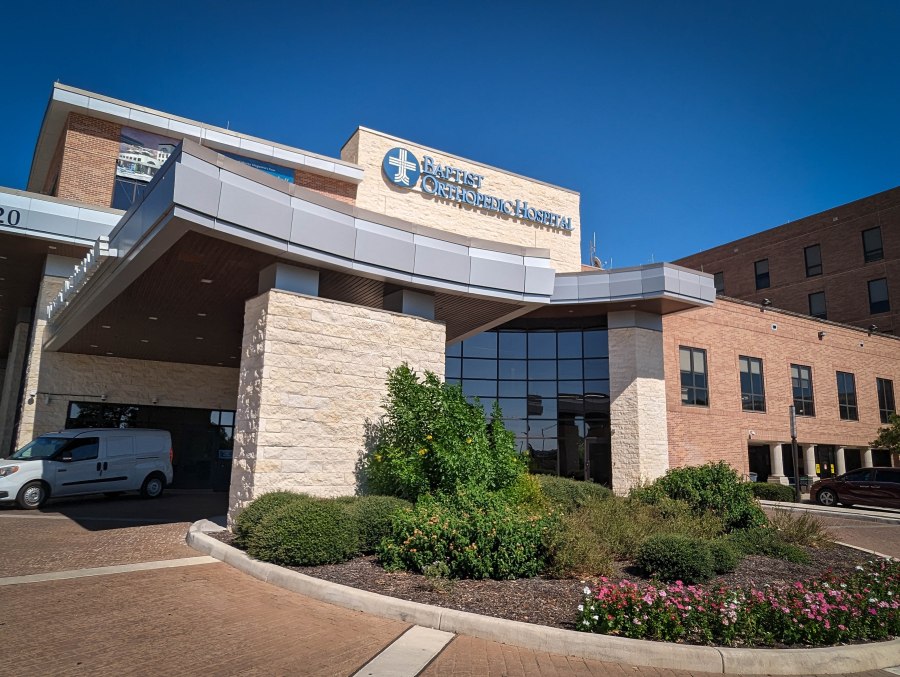
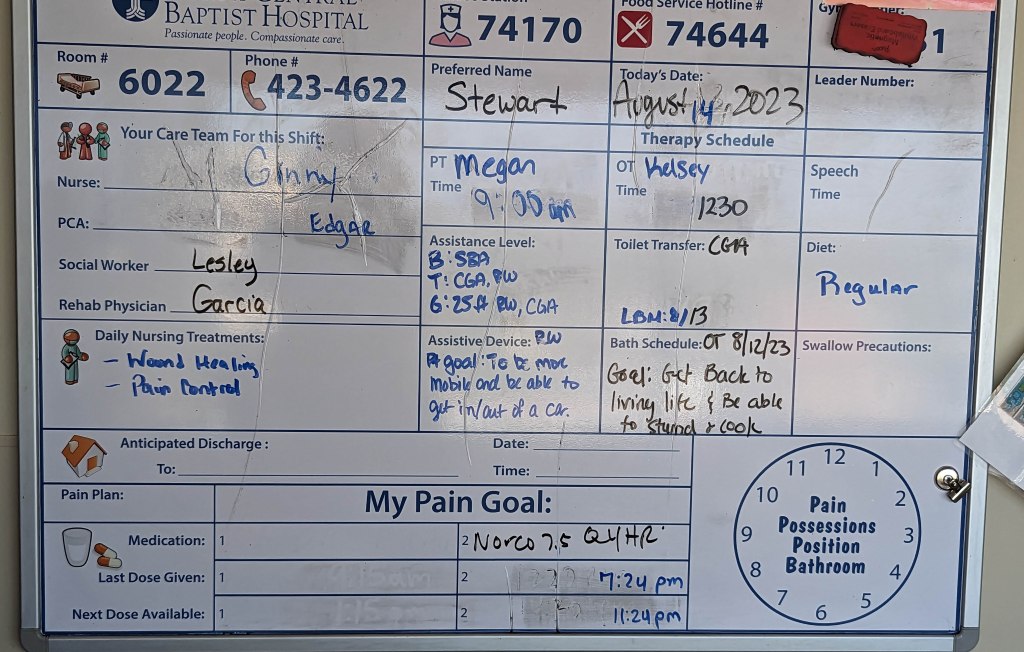
Stew received adequate emergency treatment at Hospital Mac, including X-Rays and an IV, but then spent the night in a mirthless, windowless room with a modern hospital bed but no other amenities than a few sad-looking pieces of furniture, a landscape that didn’t do much to buoy his spirits. There was no comparison to the Baptist Orthopedic Hospital in San Antonio where Stew was subsequently admitted through the emergency room, operated on, hospitalized for three days and then moved to a rehab floor for another three days. Indeed, Baptist’s level of staffing, equipment and bells-and- whistles seemed from another planet.

I can’t vouch that the seeming extravagance of the hospital in San Antonio, where Stew had stayed before for a successful knee-replacement, resulted in superior medical treatment. Maybe it’s a case of appearances, razzle-dazzle and optics. Or possibly a case of the American Medical Industrial Complex piling on at the bottomless trough of money the U.S. spends on health-care. The Texas-size meals he received didn’t hurt.
Whatever: The end result is that we were very satisfied with the treatment Stew received and particularly the final bill—zero— thanks to Medicare. We haven’t even seen a bill yet.
Health care costs in Mexico are dramatically lower than in the U.S. but increased during the pandemic and, I suspect, as a result of the recent uptick in the popularity of American-style private medical insurance. The ER attention and hospitalization for one night at Hospital Mac resulting from Stew’s hip fracture came to US$902. Charges for another knee replacement that Stew had done in 2020 at Angeles Hospital in Querétaro, part of a nationwide private hospital chain, was US$15,000, payable upon admission by credit card, bank transfer, cash or private insurance. That included a three-night hospital stay. Medicare doesn’t cover non-emergency care abroad, despite claims by some expats that they have found a way around those restrictions and smell like fraud to us.
So far so good. In the next post I will talk about the air evacuation from San Miguel to San Antonio, the more surprising part of of our “what is” experience with Stew and his broken hip.
 El Rancho Santa Clara
I’m so glad to have the doctors that I have and SKYMED! Hopefully I will never have to use it but JUST IN CASE……… In the past when I have had to go to the USA for surgery it isamazing to walk out of the hospital with nothing to pay…. Costs in Mexico in the last few years have skyrocketed. Hugs and great to read your post. Barbara San Miguel de Allende, Mexico
415 124-9450 Mx Cell 713 589-2721 Vonage
http://www.babsofsanmiguel.blogspot.com
“Life is either a daring adventure or nothing” Helen Keller
LikeLike
Thank you for your comment and for supportive messages during our crisis with Stew. It’s friends like you that I was thinking about when I wrote about the tight-knit expat community in San Miguel. Stay well. Al
LikeLike
Excellent post Al. You described exactly what we did when living in SMA. The “what if”forums was the possibility of of some catastrophic illness like a stroke or cancer that would require long term hospitalization and /or rehab in the US. The questions then are what to do with the house and animals in Mexico? What if we don’t want to live close to where our US hospital is? Example-we flew to Florida yearly for annual check ups and to visit family, and would be flown there if an emergency occurred but we sure didn’t want to live there again! Hard questions! And no single answer fits all. Lynn
LikeLike
You captured our worries precisely. As for the pets, we have Felix here who takes care of the place, despite some glitches, though if it were a long-term situation I don’t really know what we’d do. As for Florida, I share your feelings. With DeSantis in charge of the band I don’t want to live in Florida either! Cheers, Al
LikeLike
Could you tell us about your Medicare part B plan, what options there are for expats, it is a bit confusing, I turn 65 next year. Thanks for all your informative posts! John. (Neighbor of MyronJ
LikeLike
John: sorry for my slow response. I asked Stew, our financial guru, and he said that we have Part B and also Part F, which I’d never heard of, which covered our medical adventure in San Antonio from soup to nuts. But he also said Medicare doesn’t work if you live here permanently, only if you’re visiting a foreign country. He advises that you check with Medicare and avoid any under the table solutions that Medicare may regard as fraud. SkyMed is definitely worth it. A friend of ours had to be evacuated to Portland and the one-way trip cost them $40,000, so that’s something to think about. Thanks for your comment.
LikeLike
I was wondering why I hadn’t seen any Blog posts for awhile…this explains it! So glad to hear that Stew is on the mend and that he was able to get the medical attention he needed in both Mexico and the US. I’m anxious to hear about your SkyMed experience too since we’ve never had to use our policy…but..
Made our airline reservations today for our winter in SMA…Will be there from Jan.4-April 3. Looking forward to getting together with you then!!
LikeLike
After 14 or 15 years of paying premiums for SkyMed we were also beginning to doubt if it was worth it. There’s blog post coming up about that, but a preview is that SkyMed worked amazingly well, and definitely worth it in case of an emergency. Friends who had to hire their own med-vac place to Portland said they paid $40,000, and that was dollars not pesos, and $50,000 for intensive hospital care in Queretaro which they also could have saved if they had gone back to the States early. Anyway, how’s your balance issue coming along? Have they figured out anything, other than the usual “at your age…” Maybe something inside your ear, with all those little bones in there? Jim’s foot situation also sounds pretty weird. Maybe a joint trip to Lourdes might be in order except the Virgin Mary might not take you very seriously since you guys are not Catholic.
Please get it together regarding the Faroes, which sound fascinating maybe because they are so remote, even farther north than Iceland, which we both loved. Kathy was talking about cruise, which might be the best solution, if you get to visit Svalgard (?), some Norwegian outpost with mostly reindeer and the Hebrides.
Keep in touch.
al
LikeLike
Thanks for the update, and the successful outcome. That car mockup reminds me. About 5 years ago I fell and broke my right leg in two places, so I now walk with a cane (I’m 95). About 3 months ago a friend came by to show me her new car (a Ford Bronco) and to take me to dinner. The first step is about 30″ above the ground, and the seat level is about 48″ above ground level. I looked at it, tried to back up to it and the seat was 6″ above my belt. That won’t work. I finally found a handle over the door opening, and using it as an overhead bar was able to pull myself up and get a foot hold. I’m sure Stu does better than me. Now, she borrows her husbands Volvo if we go out to lunch.
LikeLike
Next time your friend asks you out for a ride in a Ford Bronco, ask him to bring a little stool to help you with that killer step. What you did is exactly what they advised Stew to do, even if it doesn’t look too graceful to passersby. I hope we’re doing as well as you when we get to be 95!
LikeLike