
A welcome addition to San Miguel’s bustling musical scene
While some travelers favor shopping, museums or natural wonders, Stew and I head for places of worship regardless of their religious affiliation. Neither one of us is particularly religious yet sitting silently under the soaring vaulted ceilings of a gothic church, rays of sunlight filtering through the stained glass windows, can turn a sightseeing stop into a moment of awe, maybe even transcendence.
What really intrigues us, though, is the idea that houses of worship are in effect snapshots, some hundreds of years old, of lofty human achievements in architecture, art, engineering and history. Kings may have been crowned, baptized or married there, scientists and literary figures entombed, sometimes amid memorials to the baser human deeds of warfare and violence.
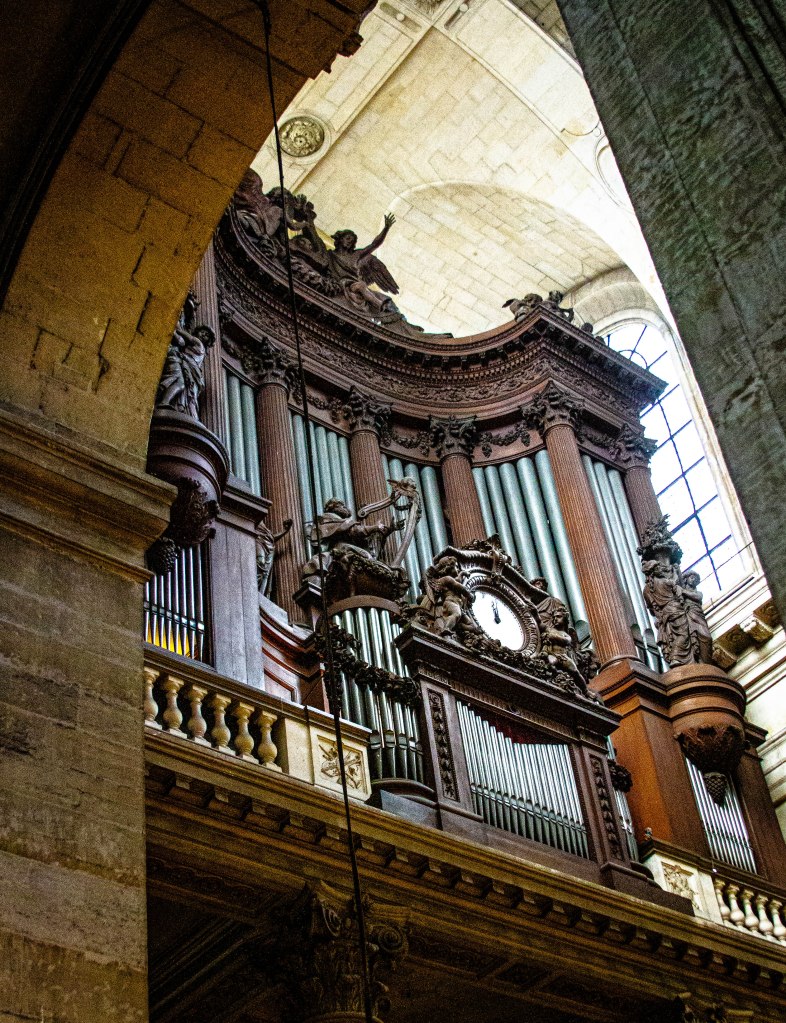
And then there are monumental pipe organs, capable of mimicking every musical sound from a piccolo to a tuba, in response to the gentle prompts of the organist’s fingers and feet.
The organs are framed by equally impressive wood enclosures, sometimes called “cabinets” in the case of smaller instruments, that feature carved figures of saints, cherubs plucking harps or blowing trumpets, and a riot of other adornments, that also conceal the intricate mechanical innards that are the heart of the instrument.
While in Paris several years ago, Stew and I had the opportunity to go up to the choir loft of St. Sulpice Church and hear, up close, its renowned organ and its approximately 7,000 pipes. It was a memorable experience that left me more curious than ever about the mechanics of such behemoths. I’ve read that before electric air pumps, it took five men pedaling Stairmaster-like blowers to drive St. Sulpice’s organ. I wonder if lengthy musical compositions required relay teams of pedalers.
In San Miguel there are more than 20 Roman Catholic places of worship though many of them are open only during high religious holidays like Easter, and none had a first-class functioning pipe organ. That gap was filled by the arrival last month of a small, 150-year-old organ with about 409 pipes, and purchased in the U.S.
In an impressive feat of logistics the organ was meticulously dismantled, shipped to San Miguel and reassembled at the Franciscan Temple and Convent of the Third Order, adjacent to the San Francisco Church in the Centro—one of the oldest in the city, dating back to late 18th Century.
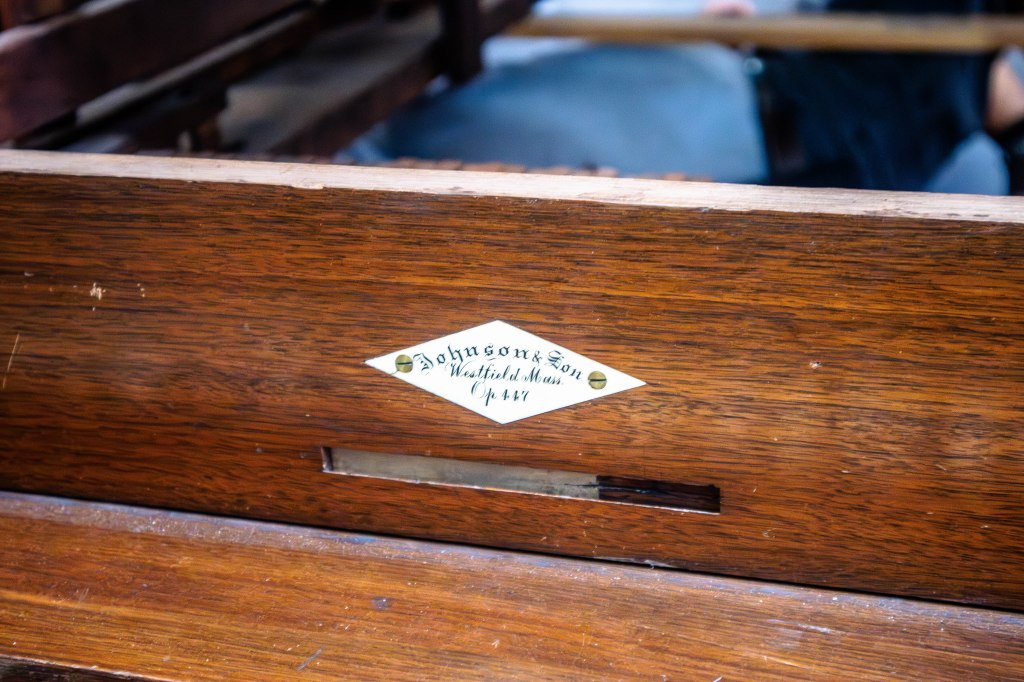
The organ was built by the renowned Johnson & Son Organ Company of Westfield, Mass., which during its life made 860 organs for churches throughout the U.S., Canada and Bermuda. Fifty-two Johnson organs were installed in Chicago after the Great Chicago Fire, some of which are still in use. A small plate over the keyboard of San Miguel’s organ bears the legend “Opus 447,” or the 447th instrument built by this company.
It’s a deceivingly small musical jewel that packs a mighty sound thanks to the resonant acoustics of its otherwise austere new home. San Miguel now can boast having a historic organ housed in its own historic church setting.
It took two-plus years of planning and negotiating—and fundraising—by patrons and other contributors to defray the estimated final cost of US$130,000 cost, some of it still to be raised.
The organ’s odyssey began at the First United Methodist Church of Williamstown, Mass., which closed in 2010 and had been used as a childcare center, with its pipe organ, in good condition and still functional, to await a buyer.
Enter the Chorale San Miguel, a group headed by Malcolm Halliday, a professional pianist, organist and conductor, and which promotes choral music, and was looking for a used pipe organ that could become the centerpiece of rehearsals and performances here.
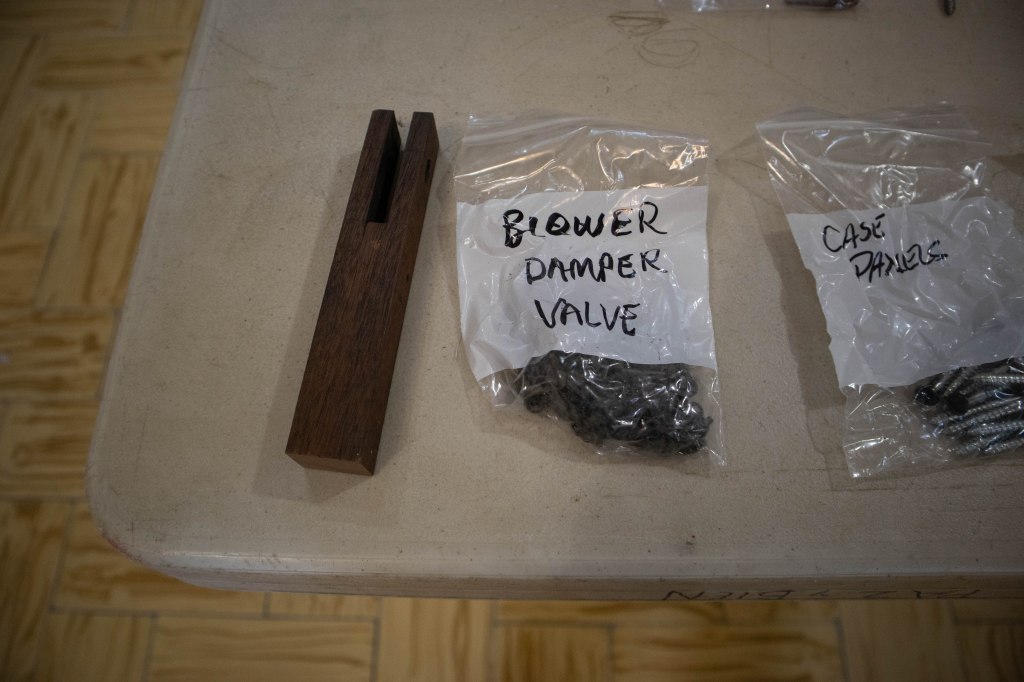
A deal was struck for $7,500, though the lengthiest and most complicated leg of the relocation—and expense—lay ahead. Patrick J. Murphy & Associates, an organ builder from Stowe, Penn., had to meticulously dismantle the organ into its hundreds of components—almost all wood—label them, prepare blueprints and package this jigsaw puzzle for shipping.
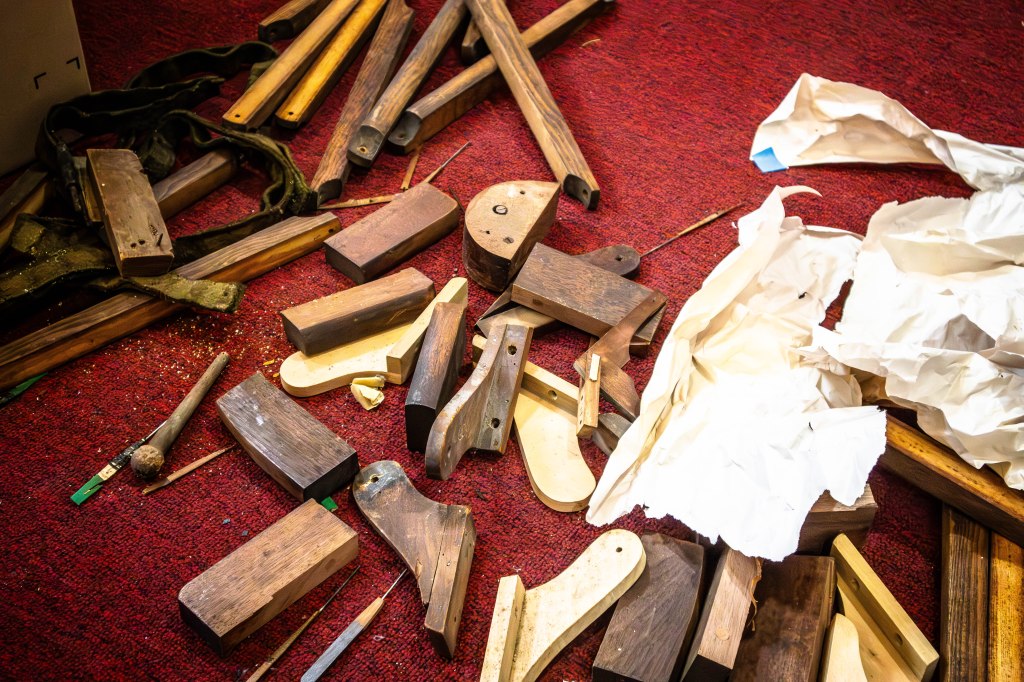
Lying all over the floor of its new home, the guts of this venerable organ looked like a fine wristwatch—though arguably larger, more complex and fragile—that had been taken apart. I wondered how it all would come back together. During the reassembly, one of Murphy’s assistants even found some words scratched on one of the wood organ pipes—a memento of nineteenth-century graffiti.
According to Halliday, removing the organ from its original church location, and bringing it to Murphy’s workshop for cleaning, checking and labeling, in preparation for its trip to San Miguel took the better part of a year. That process cost $90,000 and did not include shipping.

Halliday and the Franciscan order that owns the church where the organ would be installed negotiated a time-share, co-ownership agreement that allows the Chorale time for rehearsals and performances, and also the church for religious occasions, with both parties to share the costs. In time the Franciscan temple will inherit the instrument which in effect will become a contribution to the community of San Miguel.
Murphy estimated that approximately ninety percent of the pieces of the original instrument were used in its reincarnation here, including two gas lamps, yet to be installed, on each side of the keyboard. One notable change was the installation of a larger pedal board to improve the organ’s versatility.
The organ is an all-mechanical “tracker” organ, in which the pressure of the organist on the keyboard or pedals moves wooden rods that activate and control the amount of air that goes into the pipes. The organist also can regulate a series of large vertical louvers in front to control the volume of the music.
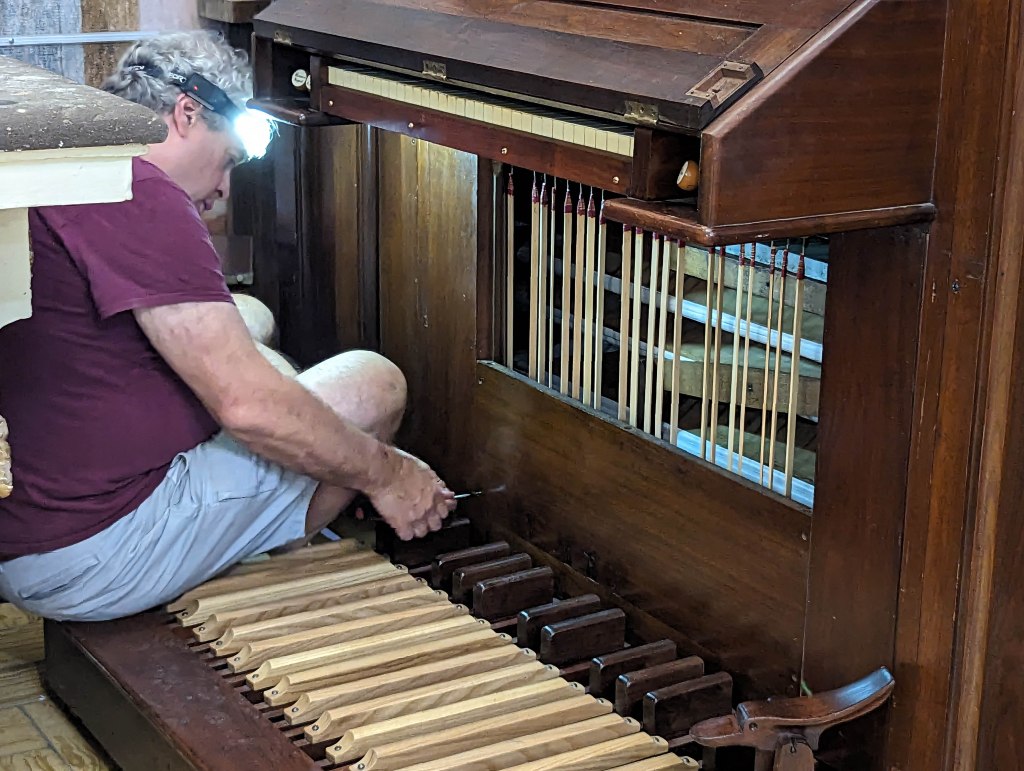
With the advent of electricity, some organs started using magnetic contacts, but the old-fashioned instruments relied on a jungle of wooden rods and linkages. The only electrical component of the organ here is a blower that inflates the wind-chest, much like a bellows.
Rather than abandon the traditional tracker mechanisms in favor of electrical or pneumatic-action organs, the Johnson Company ceased operations in 1898, its last creation a large three-manual organ for St. Paul’s Church in Chicago—Opus 860.
Installation the organ was completed about a month ago, but the “unveiling” of the venerable instrument will wait until November 21, appropriately the feast day of St. Cecilia, the patron of music.
Fundraising to cover the US $130,000 estimated cost of this project still goes on. For more information about the various ways to donate, consult choralesanmiguel.com .
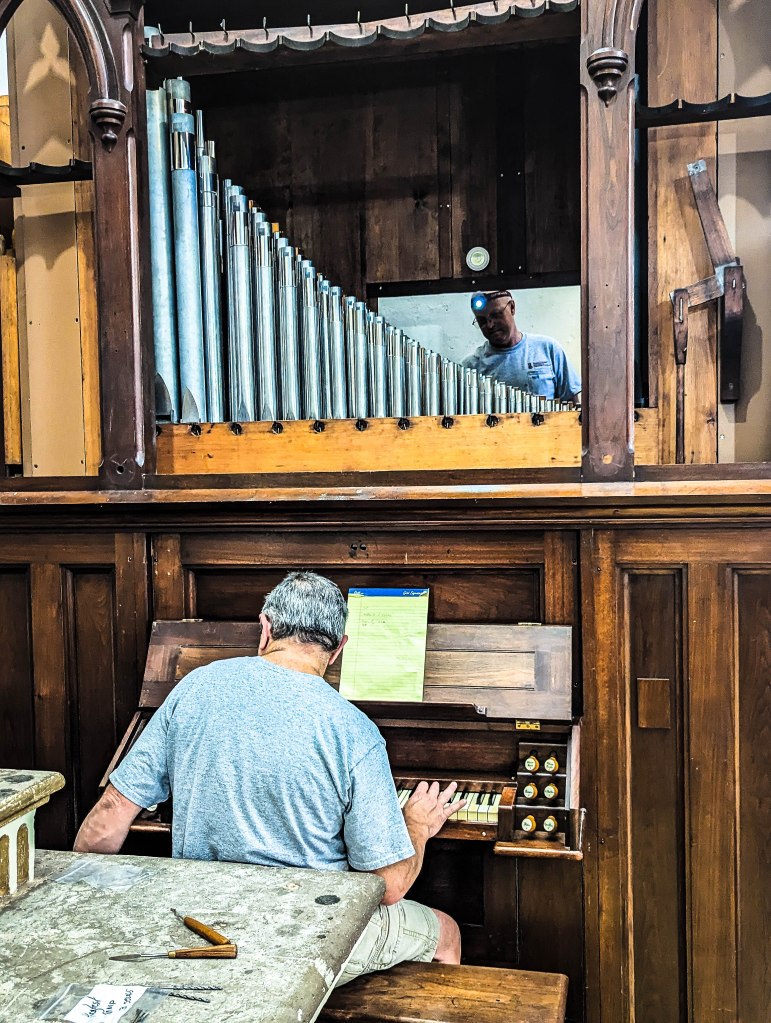
shorter ones of a tin/led alloy called “common metal.”
###
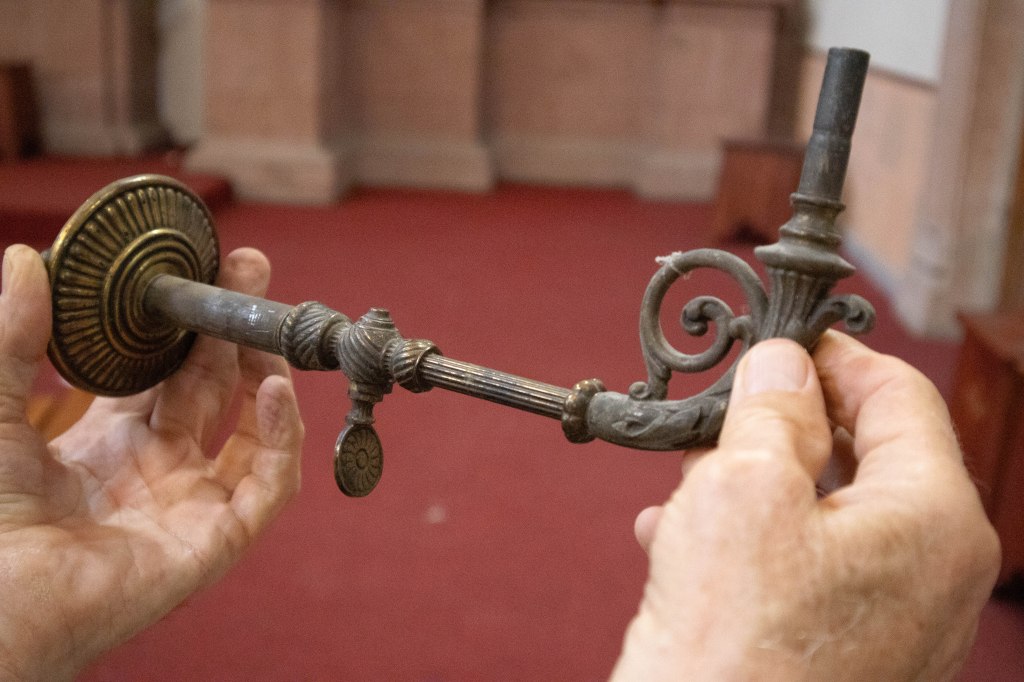
and sheet music for the organist.
 El Rancho Santa Clara
Sent from my iPhone Anita Jane Anderson
<
div dir=”ltr”>
<
blockquote type=”cite”>
LikeLike
Do you know the program for the great unveiling? Obviously a must-go …
LikeLike
I just sent Malcolm a message to ask him about the program. I haven’t a clue. He’s an excellent organist, so it should be great.
LikeLike
After almost ten minutes of trying to get my password reset so I could comment on theblog, I gave up. Your post was fascinating, amazing and so interesting. How in the world did you knowthis was happening? Hope to see you at Bill and Trey’s on Saturday! And Stew, I hope you are continuing to heal and are probably by now skipping along. Hugs Barbara San Miguel de Allende, Mexico
415 124-9450 Mx Cell 713 589-2721 Vonage
http://www.babsofsanmiguel.blogspot.com
“Life is either a daring adventure or nothing” Helen Keller
LikeLike
The minister at the Unitarians and his partner Malcolm engineer the organ project and I just tagged along. That is so much work, I don’t know whether to admire or feel sorry for them…
Yes, we’re going to the Bill and Trey fete and look forward to seeing you.
Stew is improving right along though now he’s complaining about his back. Oy.
LikeLike
Facebook posted today that Stew is in Chicago!! Weird, huh
Get Outlook for Androidhttps://aka.ms/AAb9ysg ________________________________
LikeLike
Pingback: Picking up the pieces: Malcolm Halliday’s musical dream comes together in the Templo de Tercera Orden | Musings, Magic, San Miguel and More
This is – no other word – a beautiful account of time, music, love.
LikeLike
Well, thank you. We, and Ron A. need to get together at the BBQ place on the road to Atotonilco soon.
LikeLike
Agreed – after Nov. 4th let’s get a date.
LikeLike
If you are interested in different pipe organs, I suggest a youtube series from the Organ Media Foundation. Almost each week, they visit a noteworthy pipe orgran, sometimes old, sometimes rebuilt, sometimes new, and demonstrate it’s qualities. Then they take you on a video walk through chambers showing the different divisions, and usually ending with the home organists playing one full work. I would recommend looking for the program from Methune Memorial Music Hall, and also reading the history of that organ. By the way, have you heard that in a couple of months they are going to remove the organ from the Washington National Cathedral, and send it back to I think Connecticut to be fully rebuilt? I think it is a 2 year project. Another interesting organ is in the Catholic Cathedral in Boston. Also the cathedral in Hartford, CT. Phil
LikeLike
Thank you! Though I’m fascinated by organs, I don’t know enough of the repertoire or the instruments themselves to completely understand what is going on. The YouTube site you mentioned sounds like a good place for neophytes like me. In December we’ll be visiting Paris and have planned visits to a couple of churches, aside from St. Sulpice’s Sunday Mass. Thank you for your reply! I wonder why they would have to dismantle the organ at the National Cathedral instead of updating it in place, unless they plan a major overhaul of the instrument.
LikeLike